Stainless Steel 304 vs Stainless Steel 316 Pipes, Tubes, Sheets, Plates: Difference, Price & Which is Better
Stainless Steel 304 vs Stainless Steel 316 is one of the most searched comparisons by buyers, engineers, and importers who deal with pipes, tubes, sheets, and plates. Choosing the wrong grade can increase maintenance costs, reduce product life, and affect performance in critical environments.
When both materials look similar, the confusion becomes even bigger. Many people assume they perform the same but the difference shows when they are exposed to chemicals, saltwater, or industrial conditions.
In this blog, you’ll clearly understand the difference, applications, price variation, and how to choose the right material based on your industry and location with its forms..
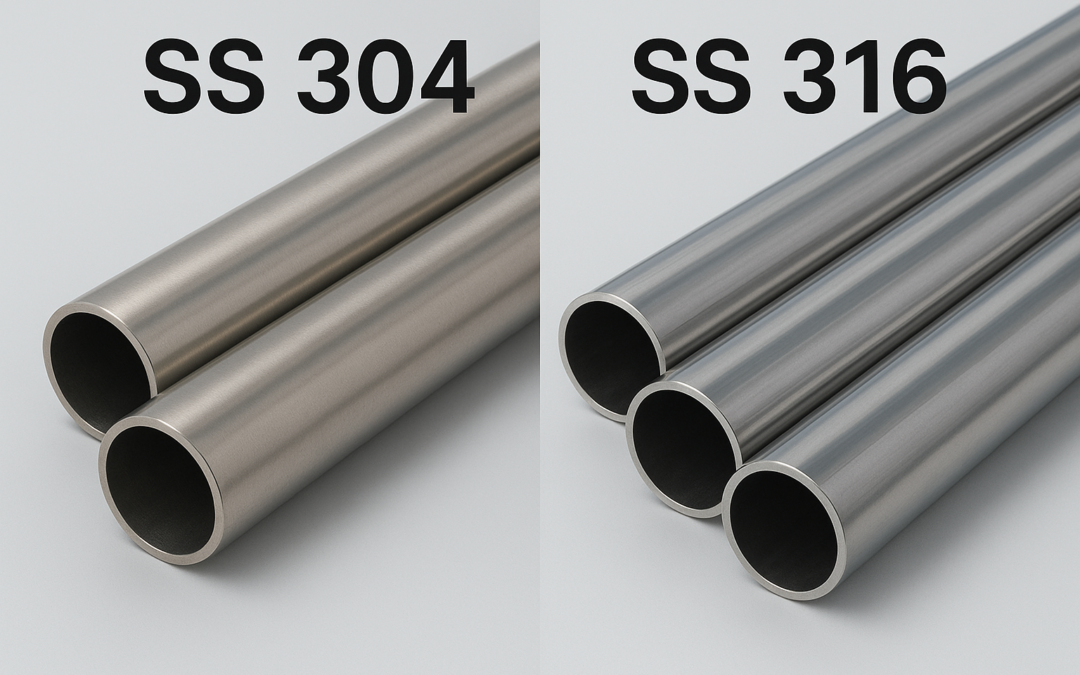
What is Stainless Steel 304 vs Stainless Steel 316?
Stainless Steel 304 vs Stainless Steel 316 refers to the comparison between two of the most commonly used stainless steel grades across industries worldwide.
Stainless Steel 304, also known as SS 304, is widely used for general-purpose applications. It offers good corrosion resistance, easy fabrication, and cost efficiency. This makes it a preferred choice for pipes, tubes, sheets, and structural applications.
Stainless Steel 316, also known as SS 316, is an upgraded version that contains molybdenum. This addition improves resistance against corrosion, especially in marine, chemical, and high-chloride environments.
In simple terms, SS 304 is suitable for standard conditions, while SS 316 is preferred where corrosion resistance is critical.
Forms Available in Stainless Steel 304 vs Stainless Steel 316
Stainless Steel 304 vs Stainless Steel 316 materials are available in multiple forms to meet different industrial requirements, especially for manufacturing, fabrication, and export. These include pipes, tubes, sheets, plates, and round bars. Each form serves a different purpose depending on the industry and application.
Stainless steel 304 pipes & tubes manufacturers supply materials widely used in construction, food processing, and water systems. Stainless steel 304 sheets & plates suppliers in Mumbai cater to fabrication and structural applications where cost-effective solutions are needed.
On the other hand, stainless steel 316 pipe manufacturer in India focuses on supplying materials for chemical, marine, and pharmaceutical industries. SS 316 pipe suppliers are in demand globally due to higher corrosion resistance.
Round bars in both grades are used in machining, fasteners, and industrial components. The demand for stainless steel 304 round bar supplier in India and stainless steel 316 round bar manufacturers is consistently rising in export markets.
Key Difference Between Stainless Steel 304 vs Stainless Steel 316
Stainless Steel 304 vs Stainless Steel 316 mainly differs in composition and corrosion resistance, even though both belong to the same austenitic stainless steel family.
The biggest difference is the presence of molybdenum in SS 316, which is absent in SS 304. This element improves resistance to chlorides and harsh chemicals.
SS 304 is known for its versatility and affordability. It performs well in most indoor and controlled environments. However, when exposed to saltwater or chemicals, it may show signs of corrosion over time.
SS 316, on the other hand, performs better in aggressive environments. It is specifically designed for conditions where corrosion resistance is critical.
Corrosion Resistance Comparison
Stainless Steel 304 vs Stainless Steel 316 shows a major difference when it comes to corrosion resistance, which directly impacts long-term performance.
SS 304 performs well in normal atmospheric conditions and mild industrial environments. It is suitable for indoor use and areas where exposure to moisture and chemicals is limited.
SS 316 is designed for harsh environments. It resists pitting and crevice corrosion caused by chlorides, making it ideal for marine and chemical industries.
The oil & gas industry in UAE depends heavily on SS 316 for pipelines and offshore applications due to high salinity. Similarly, the marine sector in Australia prefers SS 316 for long-term durability.
In contrast, the food processing industry in India widely uses SS 304 because it offers a good balance of performance and cost.
Price Difference of Stainless Steel 304 vs Stainless Steel 316
Stainless Steel 304 vs Stainless Steel 316 price comparison is one of the most important factors for buyers and importers.
SS 304 is more affordable because it does not contain molybdenum. SS 316 is more expensive due to its enhanced corrosion resistance and alloy composition.
Approximate price ranges:
• India:
o SS 304: ₹180–₹260/kg
o SS 316: ₹280–₹420/kg
• UAE:
o SS 304: AED 7–11/kg
o SS 316: AED 12–18/kg
• USA:
o SS 304: $2.5–$4/kg
o SS 316: $4–$6/kg
• UK:
o SS 304: £2–£3.5/kg
o SS 316: £3.5–£5/kg
• Europe:
o SS 304: €2.2–€3.8/kg
o SS 316: €3.8–€6/kg
For industries where corrosion resistance is not critical, SS 304 is a cost-effective option. But for long-term performance in harsh conditions, SS 316 justifies the higher price.
Applications & Industry Use
Stainless Steel 304 vs Stainless Steel 316 is widely used across different industries depending on performance requirements.
SS 304 is commonly used in:
- Food processing equipment
- Kitchen appliances
- Structural fabrication
- Water pipelines
The construction industry in the UK uses SS 304 for indoor structural and decorative applications due to its affordability and availability.
SS 316 is used in:
- Marine equipment
- Chemical plants
- Pharmaceutical industries
- Offshore structures
The chemical processing industry in Germany relies on SS 316 for handling aggressive chemicals. The water treatment industry in Singapore also prefers SS 316 for durability and resistance.
Advantages and Limitations
Stainless Steel 304 vs Stainless Steel 316 both offer benefits, but understanding limitations helps in better decision-making.
SS 304 offers good corrosion resistance, easy fabrication, and lower cost. However, it is not suitable for high chloride environments.
SS 316 provides excellent corrosion resistance and longer life in harsh conditions. Its limitation is higher cost compared to SS 304.
How to Choose Between Stainless Steel 304 vs Stainless Steel 316
Stainless Steel 304 vs Stainless Steel 316 selection depends on application, environment, and budget.
If your project involves indoor use, standard industrial conditions, or cost-sensitive applications, SS 304 is a practical choice.
If your application involves exposure to saltwater, chemicals, or extreme environments, SS 316 is the better option.
For example, the oil & gas sector in Saudi Arabia often chooses SS 316 for pipelines, while general manufacturing units in India rely on SS 304 for everyday fabrication.
Short Comparison Table for SS 304 vs 316
| Property | SS 304 | SS 316 |
|---|---|---|
| Corrosion Resistance | Good | Excellent |
| Molybdenum | No | Yes |
| Cost | Lower | Higher |
| Applications | General | Marine & Chemical |
| Strength | Similar | Similar |
Why ChooseAM Industries for Stainless Steel 304 vs 316?
Stainless Steel 304 vs Stainless Steel 316 materials should always be sourced from a reliable and experienced company to ensure quality, consistency, and timely delivery.
AM Industries is known as a trusted manufacturer, supplier, stockist, and exporter of stainless steel products including pipes, tubes, sheets, plates, and round bars.
The company serves both domestic and international markets including UAE, Saudi Arabia, USA, UK, Germany, Australia, and South Africa. With a strong supply chain and wide product range, AM Industries ensures that industries receive materials as per specifications and project requirements.
From stainless steel 304 pipes & tubes to SS 316 plates, every product is handled with proper quality control and industry standards.
What to choose SS 304 or SS 316?
Stainless Steel 304 vs Stainless Steel 316 is not about choosing the best material overall—it is about choosing the right material for your specific requirement.
SS 304 is ideal for general use and cost-sensitive projects, while SS 316 is better suited for harsh environments where corrosion resistance is critical.
Making the right decision will improve performance, reduce maintenance, and increase the lifespan of your application.
FAQs for Stainless Steel 304 vs 316
Which is better 304 or 316 stainless steel?
SS 316 is better for corrosive environments, while SS 304 is suitable for general applications.
Why is 316 more expensive than 304?
Because it contains molybdenum, which improves corrosion resistance and increases cost.
Is 304 or 316 better for food applications?
SS 304 is widely used in food applications, but SS 316 is preferred in highsalt or acidic conditions.
Which stainless steel is stronger, 304 or 316?
Both have similar strength; the main difference is corrosion resistance.
Are SS 316 pipes more corrosion resistant than SS 304?
Yes, SS 316 pipes offer better resistance to chlorides and chemicals.
What is the cost difference between SS 304 and SS 316?
SS 316 is typically 30–60% more expensive than SS 304 depending on market conditions.
Which is better for outdoor or marine use?
SS 316 is better due to its resistance to saltwater and harsh environments.
Where can I buy SS 304 and SS 316 in India?
You can source from reliable manufacturers, suppliers, and stockists who provide certified materials and export support.
What are the disadvantages of SS 316?
The main disadvantage is higher cost compared to SS 304.
Should I use 304 or 316 stainless steel?
It depends on your application—choose SS 304 for general use and SS 316 for corrosive environments.
Worldwide Suppliers
-
 India
India  United States
 Saudi Arabia
 Kuwait
 Singapore
 Malaysia
 UAE
UAE Germany
 Italy
Italy China
China UK
UK Canada
 Iran
Iran Thailand
 South Korea
 Turkey
 Morocco
 Costa Rica
 Kazakhstan
 Philippines
 Egypt
Egypt Japan
Japan Russia
 Vietnam
 Australia
 Qatar
Qatar South Africa
 Portugal
 Oman
Oman Jordan
 Spain
Spain Hong Kong
 Netherlands
 Indonesia
 Mexico
 Brazil
 France
 Taiwan
 Nigeria
 Bangladesh
 Iraq
Iraq Ukraine
 Poland
 Romania
 Cyprus
 Angola
 Colombia
 Norway
 Chile
Chile Tobago
 Greece
 Czechia
 Belgium
 Sri Lanka
 Myanmar
 Venezuela
Get A Quote