IS 2062 E250 vs IS 2062 E350 Plates – Key Differences, Properties, and Applications
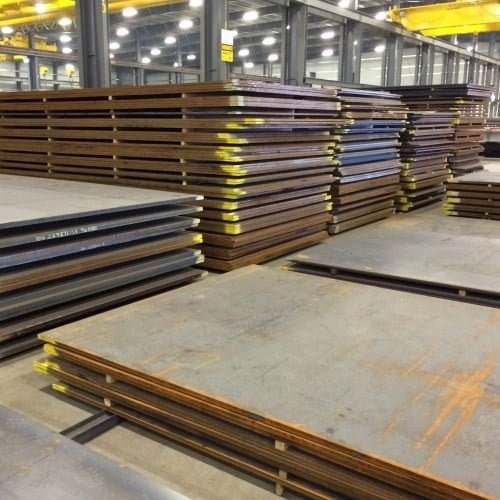
Structural steel plates are essential materials used in construction, infrastructure development, and heavy engineering industries. Among the widely used structural steel grades in India, IS 2062 E250 Plates and IS 2062 E350 Plates are two important categories specified under the IS 2062 standard developed by the Bureau of Indian Standards (BIS). These grades are commonly used for manufacturing structural components, machinery bases, bridges, and industrial equipment.
Although both grades belong to the same specification, they differ significantly in terms of strength, performance, and application areas. Understanding the difference between IS 2062 E250 vs IS 2062 E350 Plates is important for engineers, contractors, and procurement teams who need to select the right material for their projects.
This article provides a detailed comparison of these two structural steel grades, focusing on their chemical composition, mechanical properties, strength levels, and industrial applications.
Overview of IS 2062 Structural Steel Plates
The IS 2062 standard covers hot-rolled medium and high tensile structural steel used in the manufacturing of plates, sheets, bars, and sections. These steels are widely used in engineering and construction due to their durability, weldability, and reliable mechanical performance.
The grades under IS 2062 are categorized according to their minimum yield strength, which represents the maximum stress a material can withstand before permanent deformation occurs.
For example:
- IS 2062 E250 Plates have a minimum yield strength of 250 MPa
- IS 2062 E350 Plates have a minimum yield strength of 350 MPa
Both grades are also available in several sub-grades depending on impact testing and chemical composition control. These include:
- IS 2062 E250A Plates
- IS 2062 E250BR Plates
- IS 2062 E250C Plates
- IS 2062 E350A Plates
- IS 2062 E350BR Plates
- IS 2062 E350C Plates
These variants are designed to meet different industrial performance standards and environmental conditions.
What Are IS 2062 E250 Plates?
IS 2062 E250 Plates are medium tensile structural steel plates designed for general engineering and construction purposes. They offer a balanced combination of strength, weldability, and formability, making them suitable for a wide range of fabrication and structural applications.
Grades such as IS 2062 E250A Plates, IS 2062 E250BR Plates, and IS 2062 E250C Plates are commonly used in projects where moderate structural strength and easy fabrication are required.
- Minimum yield strength: 250 MPa
- Excellent weldability and machinability
- Good ductility and toughness
- Easy fabrication
- Cost-effective
Applications of IS 2062 E250 Plates
These plates are widely used in industries where medium-strength structural materials are sufficient. Common applications include:
- Structural construction frameworks
- Industrial buildings and warehouses
- Fabrication of machinery components
- Storage tanks and containers
- Railway wagons and transportation equipment
- General engineering structures
Because of their reliable performance and affordability, IS 2062 E250 plates remain a popular choice for many fabrication projects.
What Are IS 2062 E350 Plates?
IS 2062 E350 Plates are high tensile structural steel plates designed for applications requiring greater strength and load-bearing capacity. These plates offer significantly higher mechanical strength compared to E250 grade, making them ideal for heavy engineering and infrastructure projects.
Variants such as IS 2062 E350A Plates, IS 2062 E350BR Plates, and IS 2062 E350C Plates are available to meet specific engineering requirements.
- Minimum yield strength of 350 MPa
- Higher tensile strength than E250 grade
- Excellent structural stability
- Good weldability despite higher strength
- Suitable for heavy-duty structural applications
Applications of IS 2062 E350 Plates
Due to their higher strength and durability, these plates are widely used in demanding engineering environments, such as:
- Bridge construction
- Heavy structural frameworks
- Mining and earthmoving equipment
- Offshore and marine structures
- Industrial plant construction
- Infrastructure development projects
These applications require materials capable of withstanding high stress and heavy loads, which makes IS 2062 E350 plates a preferred option.
Chemical Composition Comparison
The chemical composition of structural steel determines its strength, hardness, weldability, and corrosion resistance.
Both E250 and E350 plates contain common alloying elements such as:
- Carbon
- Manganese
- Silicon
- Phosphorus
- Sulfur
However, the proportions of these elements vary slightly to achieve the required mechanical properties.
| Element | IS 2062 E250 | IS 2062 E350 |
|---|---|---|
| Carbon | Moderate | Controlled |
| Manganese | Standard | Higher |
| Silicon | Low | Moderate |
| Phosphorus | Limited | Limited |
| Sulfur | Limited | Limited |
Mechanical Properties Comparison
One of the most important aspects of comparing IS 2062 E250 vs IS 2062 E350 Plates is understanding their mechanical performance.
| Property | IS 2062 E250 | IS 2062 E350 |
|---|---|---|
| Yield Strength | 250 MPa | 350 MPa |
| Tensile Strength | Moderate | Higher |
| Ductility | Good | Good |
| Weldability | Excellent | Very Good |
| Performance | Medium load | Heavy load |
The 100 MPa difference in yield strength is a key factor that distinguishes these two grades.
Strength Comparison
Strength plays a critical role when selecting structural steel plates for engineering applications.
IS 2062 E250 Plates
- Suitable for moderate structural loads
- Used in general construction and fabrication
- Provides balanced strength and workability
IS 2062 E350 Plates
- Designed for heavy load-bearing structures
- Offers higher resistance to stress and deformation
- Suitable for large infrastructure projects
Because of their higher yield strength, E350 plates can handle more demanding structural conditions.
Industrial Applications Comparison
Both grades are widely used across various industries, but their application areas differ depending on structural strength requirements.
Applications of IS 2062 E250 Plates
- Fabrication and structural engineering
- Industrial sheds and buildings
- Agricultural equipment
- Machinery frames
- Transportation components
Applications of IS 2062 E350 Plates
- Bridges and highways
- Heavy machinery structures
- Mining equipment
- Offshore engineering structures
- Infrastructure and industrial plants
This difference highlights how each grade is optimized for different engineering demands.
Cost Comparison
In general, IS 2062 E250 Plates are more economical compared to E350 plates. This is mainly because they are produced with lower strength requirements and simpler processing conditions.
However, IS 2062 E350 Plates may provide better long-term value in projects requiring higher structural strength. Their improved mechanical properties may allow engineers to reduce material thickness while maintaining the same load-bearing capacity.
Therefore, the final choice often depends on project specifications, safety requirements, and budget considerations.
Which Plate Should You Choose From A. M. Industries?
Selecting between IS 2062 E250 Plates and IS 2062 E350 Plates depends on the nature of the project and the required mechanical performance.
- General construction
- Fabrication work
- Medium load applications
- Cost-sensitive projects
Choose IS 2062 E350 Plates if your project requires:
- High strength structural components
- Heavy machinery fabrication
- Bridges and infrastructure projects
- High load-bearing capacity
Consulting with experienced steel suppliers and engineers can help determine the most suitable grade for your application.
Conclusion
Both IS 2062 E250 Plates and IS 2062 E350 Plates are widely used structural steel grades that offer excellent performance in construction and engineering applications. While they share the same IS 2062 specification, their primary difference lies in their yield strength and structural capabilities.
E250 plates provide reliable performance for general engineering and fabrication projects, offering good weldability and cost efficiency. On the other hand, E350 plates deliver higher strength and durability, making them ideal for heavy-duty structural applications and infrastructure development.
Understanding the differences between IS 2062 E250 vs IS 2062 E350 Plates helps industries select the most appropriate material for their projects, ensuring safety, efficiency, and long-term structural reliability.
Worldwide Suppliers
-
 India
India  United States
 Saudi Arabia
 Kuwait
 Singapore
 Malaysia
 UAE
UAE Germany
 Italy
Italy China
China UK
UK Canada
 Iran
Iran Thailand
 South Korea
 Turkey
 Morocco
 Costa Rica
 Kazakhstan
 Philippines
 Egypt
Egypt Japan
Japan Russia
 Vietnam
 Australia
 Qatar
Qatar South Africa
 Portugal
 Oman
Oman Jordan
 Spain
Spain Hong Kong
 Netherlands
 Indonesia
 Mexico
 Brazil
 France
 Taiwan
 Nigeria
 Bangladesh
 Iraq
Iraq Ukraine
 Poland
 Romania
 Cyprus
 Angola
 Colombia
 Norway
 Chile
Chile Tobago
 Greece
 Czechia
 Belgium
 Sri Lanka
 Myanmar
 Venezuela
Get A Quote