Choosing between 309 vs 304 vs 316 stainless steel depends mainly on the operating temperature, corrosion environment, fabrication requirements, and application. Although all three are austenitic stainless steel grades, their chromium, nickel, and molybdenum contents give them different performance characteristics.
Stainless Steel 309 is particularly suited to elevated-temperature and oxidation-resistant applications. Stainless Steel 304 is one of the most widely used general-purpose stainless steels, while Stainless Steel 316 is often selected where improved resistance to chlorides and aggressive environments is required.
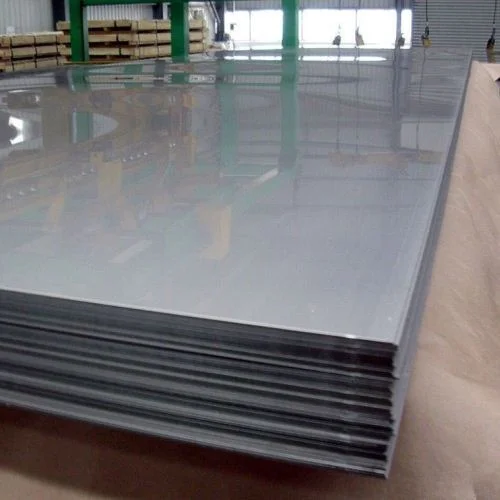
This guide compares 309 stainless steel vs 304 vs 316 so buyers, engineers, fabricators, and procurement teams can understand which grade is more suitable for their application.
309 vs 304 vs 316 Stainless Steel: Quick Comparison
| Property | Stainless Steel 309 | Stainless Steel 304 | Stainless Steel 316 |
|---|---|---|---|
| Type | Austenitic stainless steel | Austenitic stainless steel | Austenitic stainless steel |
| UNS | S30900 | S30400 | S31600 |
| Chromium | Approximately 22–24% | Approximately 18–20% | Approximately 16–18% |
| Nickel | Approximately 12–15% | Approximately 8–10.5% | Approximately 10–14% |
| Molybdenum | Not normally added as a principal alloying element | Not normally added as a principal alloying element | Approximately 2–3% |
| High-temperature performance | Excellent | Good | Good |
| Oxidation resistance at elevated temperature | Excellent | Moderate | Good |
| General corrosion resistance | Very good | Very good | Excellent, especially in chloride environments |
| Typical applications | Furnaces, heat exchangers, oven linings, boiler components | Food equipment, kitchen equipment, architectural and general fabrication | Chemical processing, marine environments, pharmaceutical and food processing |
The comparison shows why there is no single “best” stainless steel grade. The correct material depends on the service conditions. Type 309 is particularly attractive when high-temperature oxidation resistance is a major requirement, while 316 has an important advantage in chloride-containing environments because of its molybdenum addition. :contentReference[oaicite:0]{index=0}
What Is Stainless Steel 309?
Stainless Steel 309, also known as AISI 309, UNS S30900, or Alloy 309, is an austenitic chromium-nickel stainless steel developed for applications requiring good corrosion resistance and strong performance at elevated temperatures.
Its relatively high chromium and nickel content gives 309 stainless steel better oxidation resistance and elevated-temperature performance than common grades such as 304. Type 309 is available in flat-rolled product forms including stainless steel 309 plates, sheets, and strips. :contentReference[oaicite:1]{index=1}
For applications requiring lower carbon content and improved weldability, 309S stainless steel is commonly considered. Type 309S corresponds to UNS S30908, while 309H corresponds to UNS S30909. :contentReference[oaicite:2]{index=2}
What Is Stainless Steel 304?
Stainless Steel 304, commonly called AISI 304 or UNS S30400, is a widely used austenitic stainless steel grade.
It offers a useful combination of corrosion resistance, formability, weldability, strength, and availability. This makes 304 stainless steel suitable for a wide range of general-purpose applications.
However, when the primary requirement changes from general corrosion resistance to prolonged exposure to elevated temperatures, 309 stainless steel can be a more appropriate choice.
What Is Stainless Steel 316?
Stainless Steel 316, also identified as AISI 316 and UNS S31600, is another austenitic stainless steel grade. Its major distinction from 304 is the addition of approximately 2–3% molybdenum.
This molybdenum addition improves resistance to localized corrosion, particularly in chloride-containing environments. For this reason, 316 stainless steel is widely considered for marine, chemical-processing, pharmaceutical, and other demanding environments. :contentReference[oaicite:3]{index=3}
309 vs 304 Stainless Steel
The comparison of 309 vs 304 stainless steel is particularly important when selecting material for elevated-temperature service.
Heat Resistance
309 stainless steel has a clear advantage over 304 for many high-temperature applications. Its higher chromium and nickel content contributes to better oxidation resistance and retention of useful properties at elevated temperatures. :contentReference[oaicite:4]{index=4}
Corrosion Resistance
Both grades provide good corrosion resistance, but they are optimized for different requirements. Stainless Steel 304 is an excellent general-purpose corrosion-resistant grade, whereas 309 is especially useful where corrosion resistance must be combined with elevated-temperature service.
Applications
304 stainless steel is commonly used in kitchen equipment, food-processing equipment, architectural components, tanks, and general fabrication.
309 stainless steel is more commonly associated with furnace components, oven linings, boiler baffles, heat exchangers, and other high-temperature equipment. :contentReference[oaicite:5]{index=5}
309 vs 316 Stainless Steel
The choice between 309 vs 316 stainless steel depends strongly on whether the main challenge is high temperature or aggressive corrosion.
309 for High-Temperature Applications
When oxidation resistance and elevated-temperature performance are the primary requirements, SS 309 is often a strong choice. It was specifically developed as a heat-resistant austenitic stainless steel. :contentReference[oaicite:6]{index=6}
316 for Chloride and Chemical Environments
SS 316 has an important advantage where chloride exposure and localized corrosion are major concerns because it contains molybdenum. Therefore, 316 can be preferable for marine and chloride-rich environments.
Which Is Better: 309 or 316?
Neither grade is universally better. If the primary requirement is high-temperature oxidation resistance, Stainless Steel 309 may be more appropriate. If the primary requirement is chloride corrosion resistance, Stainless Steel 316 may be the better choice.
309 vs 304 vs 316: Chemical Composition
| Element | 309 | 304 | 316 |
|---|---|---|---|
| Chromium (Cr) | 22–24% | 18–20% | 16–18% |
| Nickel (Ni) | 12–15% | 8–10.5% | 10–14% |
| Molybdenum (Mo) | — | — | 2–3% |
| Carbon (C) | 0.20% max | 0.08% max | 0.08% max |
| Iron (Fe) | Balance | Balance | Balance |
Typical composition data show the principal difference in alloy design: 309 has higher chromium and nickel than 304, while 316 contains molybdenum that helps improve resistance to chloride-related corrosion. Exact limits should always be confirmed against the applicable material specification and purchase requirements. :contentReference[oaicite:7]{index=7}
309 vs 304 vs 316: Temperature Performance
Temperature is one of the most important factors when comparing these three stainless steel grades.
SS 309 is designed for elevated-temperature service and offers strong oxidation resistance. This makes it particularly relevant for furnace, oven, heat-treatment, boiler, and thermal-processing applications.
SS 304 is better suited to general-purpose applications where extreme heat is not the primary design consideration.
SS 316 can also be used at elevated temperatures, but its major advantage is generally associated with corrosion resistance in demanding environments rather than being chosen solely as a heat-resistant grade.
309 vs 304 vs 316: Applications
| Application | Recommended Grade | Reason |
|---|---|---|
| Furnace components | 309 | High-temperature and oxidation resistance |
| Oven linings | 309 | Suitable for elevated-temperature service |
| Boiler baffles | 309 | Heat-resistant performance |
| Kitchen equipment | 304 | General corrosion resistance and fabrication performance |
| Food-processing equipment | 304 / 316 | Depends on chemical and chloride exposure |
| Marine environments | 316 | Improved chloride resistance |
| Chemical processing | 316 / 309 | Depends on temperature and chemical environment |
| High-temperature heat exchangers | 309 | Elevated-temperature oxidation resistance |
309 vs 310 Stainless Steel: How Are They Different?
A related question is the difference between 309 and 310 stainless steel. Both are heat-resistant austenitic stainless steel grades, but Type 310 generally contains higher chromium and nickel levels than Type 309.
Type 309 typically contains approximately 22–24% chromium and 12–15% nickel, while Type 310 contains approximately 24–26% chromium and 19–22% nickel. This difference can make 310 attractive for more demanding high-temperature environments. :contentReference[oaicite:8]{index=8}
The correct choice should therefore be based on the actual operating temperature, atmosphere, oxidation conditions, mechanical requirements, and applicable specification.
Is 309 Stainless Steel Good for High-Temperature Applications?
Yes. 309 stainless steel is specifically associated with elevated-temperature applications because of its chromium-nickel alloy design and resistance to oxidation.
Common applications include furnace linings, oven components, boiler baffles, heat exchangers, petroleum refining equipment, and thermal-processing equipment. :contentReference[oaicite:9]{index=9}
Will 309 Stainless Steel Rust?
309 stainless steel is corrosion resistant, but like other stainless steel grades, it should not be described as completely rust-proof under every environment.
Its performance depends on factors such as temperature, moisture, chlorides, chemicals, surface condition, fabrication, and service conditions. The grade is particularly valuable when corrosion resistance must be combined with elevated-temperature oxidation resistance.
Stainless Steel 309 Plate Standards
For flat-rolled products, specifications such as ASTM A240/A240M and ASME SA240/SA240M are important references. Type 309, 309S, and 309H are associated with UNS designations including S30900, S30908, and S30909. :contentReference[oaicite:10]{index=10}
| Grade | UNS | Common Identification |
|---|---|---|
| 309 | UNS S30900 | AISI 309 / Alloy 309 |
| 309S | UNS S30908 | AISI 309S / Low-carbon 309 |
| 309H | UNS S30909 | High-carbon 309H |
| 309Si | DIN 1.4828 | European designation |
Which Stainless Steel Grade Should You Choose?
Use the following basic selection guide:
- Choose 309 when elevated-temperature service and oxidation resistance are major requirements.
- Choose 304 for general-purpose corrosion-resistant stainless steel applications.
- Choose 316 when improved resistance to chloride-containing or aggressive environments is important.
However, final material selection should be based on the actual operating conditions, temperature, chemical exposure, fabrication method, mechanical requirements, applicable standards, and engineering specifications.
Why Choose Stainless Steel 309 Plates?
When your application requires a combination of high-temperature performance, oxidation resistance, corrosion resistance, and good strength, Stainless Steel 309 Plates can be an appropriate material choice.
Stainless Steel 309 Plates are available for applications where standard grades such as 304 may not provide the required elevated-temperature performance. Depending on the application and specification, buyers may also consider 309S or 309H variants.
If you are sourcing ASTM A240 stainless steel 309 plates, specify the required grade, thickness, width, length, surface finish, quantity, testing requirements, and documentation before placing an order.
View Stainless Steel 309 Plates
Frequently Asked Questions
What is better, 304 or 309 stainless steel?
For general-purpose applications, 304 is widely used. For elevated-temperature applications requiring improved oxidation resistance, 309 is generally the more suitable grade.
What is the difference between 309 and 316 stainless steel?
309 is primarily valued for elevated-temperature and oxidation-resistant service, while 316 contains molybdenum and is particularly useful where improved resistance to chloride-related corrosion is required.
What is the difference between 309 and 310 stainless steel?
Both are heat-resistant austenitic stainless steels, but 310 generally contains higher chromium and nickel than 309 and is commonly selected for more demanding high-temperature applications.
Is 309 stainless steel stronger than 304?
Strength depends on the product form, condition, temperature, and applicable specification. The choice between 309 and 304 should therefore not be based on strength alone; temperature, corrosion environment, fabrication, and design requirements should also be considered.
Is 309 stainless steel suitable for welding?
309 can be welded using appropriate procedures. For applications where lower carbon content and improved resistance to sensitization are important, 309S may be considered. The welding procedure should be selected according to the material condition and service requirements.
What is the equivalent of 309 stainless steel?
Common identifiers for Type 309 include AISI 309 and UNS S30900. European designations can differ depending on the specific alloy variant, so the applicable material standard should always be checked before treating grades as direct equivalents.
Does 309 stainless steel rust?
309 is corrosion resistant but is not immune to corrosion in every environment. Chlorides, chemicals, moisture, temperature, surface condition, and service conditions can affect corrosion performance.
Conclusion
The comparison of 309 vs 304 vs 316 stainless steel shows that each grade serves a different purpose. 304 stainless steel remains a strong general-purpose choice, 316 stainless steel is often preferred for chloride and aggressive corrosion environments, and 309 stainless steel is particularly valuable for elevated-temperature and oxidation-resistant applications.
For buyers looking specifically for Stainless Steel 309 Plates, selecting the correct grade and specification is essential. ASTM A240, ASME SA240, UNS designations, dimensions, finish, testing, and application requirements should all be confirmed before procurement.
Explore Stainless Steel 309 Plates for product specifications, available sizes, finishes, and sourcing information.
Worldwide Suppliers
-
 India
India  United States
 Saudi Arabia
 Kuwait
 Singapore
 Malaysia
 UAE
UAE Germany
 Italy
Italy China
China UK
UK Canada
 Iran
Iran Thailand
 South Korea
 Turkey
 Morocco
 Costa Rica
 Kazakhstan
 Philippines
 Egypt
Egypt Japan
Japan Russia
 Vietnam
 Australia
 Qatar
Qatar South Africa
 Portugal
 Oman
Oman Jordan
 Spain
Spain Hong Kong
 Netherlands
 Indonesia
 Mexico
 Brazil
 France
 Taiwan
 Nigeria
 Bangladesh
 Iraq
Iraq Ukraine
 Poland
 Romania
 Cyprus
 Angola
 Colombia
 Norway
 Chile
Chile Tobago
 Greece
 Czechia
 Belgium
 Sri Lanka
 Myanmar
 Venezuela
Get A Quote